

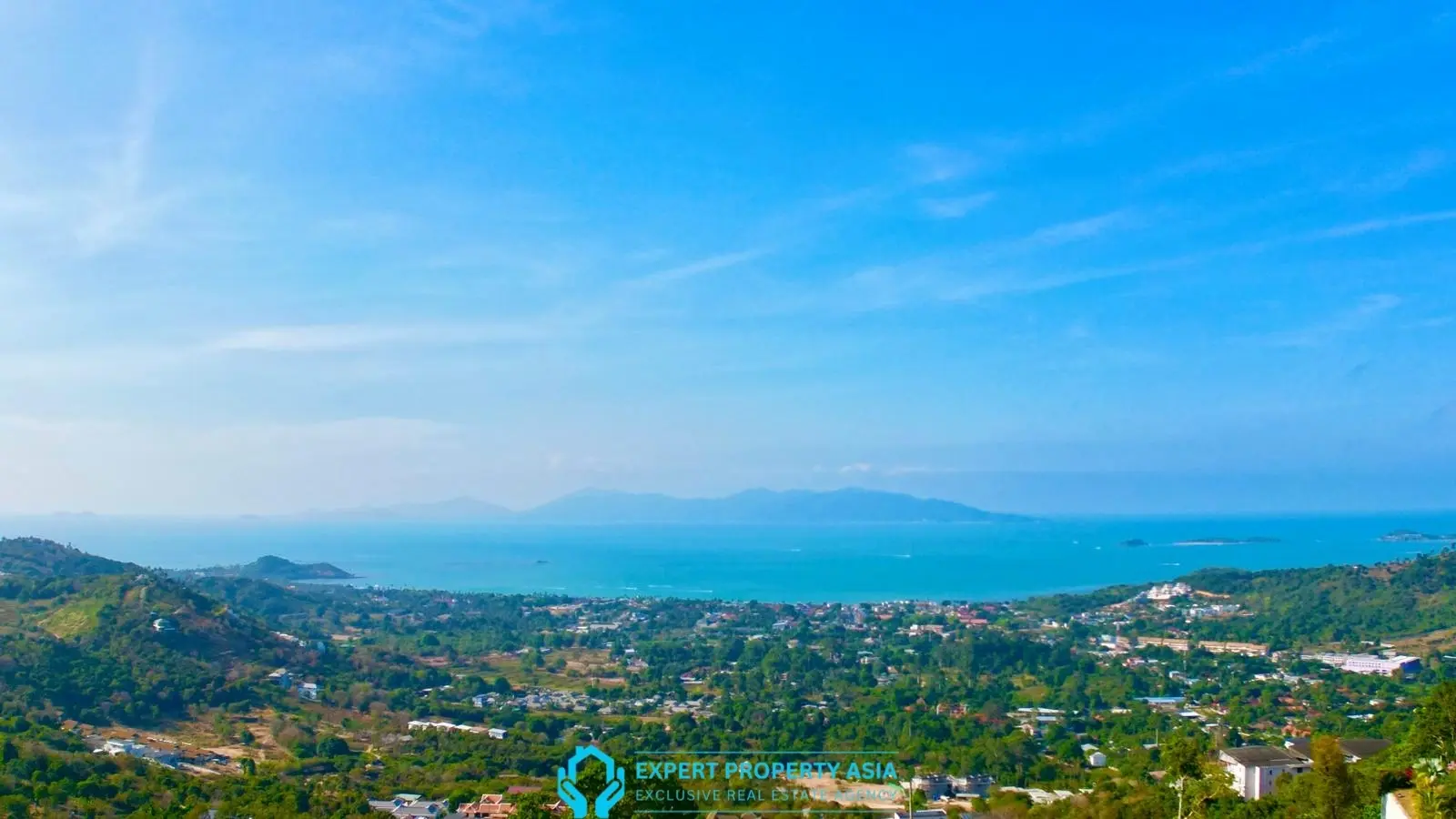
Buying Land in Koh Samui: What Can You Actually Build?
A buyer’s guide to title, access, terrain, environmental controls and the checks to make before committing to land in Koh Samui.

The view may draw you to a plot. The right questions help you understand what you could create there. On Koh Samui, a piece of land is about more than its outlook or asking price. The title, access, slope, services and planning controls all influence the home or development that may be possible — and the cost of delivering it. This guide takes you through the checks that help buyers compare sites with a clearer picture before making a commitment.
A clear answer
Buying land in Koh Samui: can you build on the plot?
Potentially — but it depends on the exact plot and what you want to build. A land title records legal rights; it does not, by itself, approve a building. Before making an offer, ask a Thai property lawyer to review the title and access rights, a surveyor to confirm the boundaries and levels, and an architect or engineer to test an early design against the rules for that location. Only the relevant authorities can grant formal permission.
Use this as a practical buyer’s guide, whether you are considering a private villa, a family home or a larger development. It explains what to request, which professionals can assess it, and how the findings affect your decision. The goal is to understand the opportunity before you commit — not to declare a site buildable from a listing photograph or a short description.
What makes a plot suitable for development?
A plot can suit one project and be a poor fit for another. Start with three questions: are you acquiring the legal interest you think you are buying; can the intended use and design be approved at that location; and can the site support the project safely and within a realistic budget? Each question needs different evidence and, usually, a different professional.
The practical side matters just as much. A beautiful hillside setting may call for more access work, foundations or retaining structures than a flatter site. A coastal parcel may raise different questions about drainage, boundaries and local controls. Utilities, construction access and the way rainwater moves across the land can all influence the final design.
The useful comparison is not simply price per square metre. It is how well the land fits the home or project you have in mind, once the legal position, design options and likely site costs are understood.
Ownership, permission and practicality are different tests
- What legal interest is being sold? Your lawyer should verify the title or tenure, the registered rights and the seller’s authority to transfer it.
- Can the proposed use receive approval? The location, intended use, building design and applicable environmental, planning and building-control rules all matter.
- Can the site support the project in practice? Terrain, ground conditions, road access, drainage, utilities and construction costs need to be understood.
Keep these checks separate. A clear title tells you about the recorded land rights; a planning review considers what may be permitted; and a site assessment considers whether the proposal can be built sensibly. You need all three before treating a plot as a serious candidate.
What should buyers know about Koh Samui’s 2025 environmental protection rules?
The key reference is the Ministry of Natural Resources and Environment notification published in the Royal Gazette on 21 May 2025. It took effect on 22 May 2025 and is scheduled to apply for five years. The Office of Natural Resources and Environmental Policy and Planning (ONEP) confirms the publication date, start date and designated coverage. The notification covers specified areas of Koh Samui, Koh Phangan and Koh Tao; it does not impose one identical restriction on every property across the islands.
On Koh Samui, the notification names the subdistricts of Taling Ngam, Bo Phut, Maret, Mae Nam, Na Mueang, Ang Thong and Lipa Noi. The mapped areas and conditions within those subdistricts matter: the name of a neighbourhood, a listing pin or the presence of a nearby house cannot confirm which rules apply to a particular parcel. Have the site coordinates checked against the official maps before assessing a design.
Check the designated area before assessing the site
The notification divides the designated territory into areas and sets different controls according to location and conditions such as elevation and slope. This is why two nearby plots may not have the same development options. Ask your architect and Thai lawyer to identify the exact mapped area and the clauses that apply to the land you are considering.
How the slope provisions apply
The slope figures in the notification are percentage gradients, not degrees. In specified zones, additional building requirements apply to land with a gradient starting at 35%. Depending on the zone and the proposed project, these rules can influence the type of building, height, siting, footprint and open or permeable space. The number on its own does not decide what is allowed; the exact zone, measured slope and proposed use must be considered together.
There are also separate restrictions on certain excavation, grading and cut-and-fill work on land with a gradient greater than 35% in specified areas, subject to stated exceptions and approval requirements. This matters if a concept depends on substantial excavation, imported fill or large retaining walls. Ask the architect and engineer to estimate the likely earthworks from a proper survey before relying on an early design or construction budget.
Tree protection on steep land
On some steep land, the notification adds protection for specified existing natural trees and their root systems. The relevant provisions include land with a gradient of 50% or more and identify certain larger trees by trunk measurement. This is not an island-wide rule that automatically bans all building above 50% slope. It can, however, affect where a building, driveway or garden may be placed, so tree locations should be included in the site assessment.
For a buyer, the process is straightforward: have the surveyor measure the land, ask the architect to identify the relevant zone and design limits, and have a Thai lawyer check the applicable legal provisions. The Royal Gazette notification is the legal source; the ONEP page confirms the government’s publication and coverage information. A general map or English summary cannot establish what may be built on an individual plot.
When a project may need environmental assessment
Some project types and sizes may require an initial environmental examination or a full environmental impact assessment. The requirements depend on the category, scale and location of the proposal. A private home should not automatically be treated in the same way as a hotel, multi-unit development or subdivision. If your plans extend beyond a single residence, ask a qualified environmental consultant to confirm the process and likely timescale early.
An existing house or partly completed project needs its own review. The notification contains transitional provisions for certain buildings and works that already had the relevant permissions before it took effect. Ask for the original building permit, approved drawings, completion records and details of later changes. An earlier approval does not automatically cover an extension, reconstruction or change of use.
The environmental rules sit alongside planning, building-control and other requirements. Passing one check does not remove the others. The most useful early step is to give your lawyer, surveyor and architect the same title documents, survey and project brief, so each review is based on the same boundaries and the same intended development.
Which land title documents should you check when buying land in Koh Samui?
Begin with the original Thai land document, not the wording in an advertisement. A Chanote (Nor Sor 4 Jor) is a title deed. Nor Sor 3 Gor and Nor Sor 3 are certificates of utilisation with different legal and registration characteristics. They are not interchangeable, and the document name alone does not tell you whether the property is right for your plans. The Department of Lands’ guidance on land eligible for title documents provides official background in Thai; your lawyer should explain the exact document and rights for the plot.
The important point is what the Land Office record actually says about this parcel: who is registered as the owner, what land is included, which rights or restrictions are recorded, and what can be transferred. Ask your Thai lawyer to inspect the original document and check the current Land Office record. A scan, English translation or agent’s summary is useful for an initial conversation, but it is not a substitute for that check.
Even a Chanote does not grant permission to build. It is one part of the due-diligence picture, not proof that a proposed villa or development can be approved. Your lawyer should also check the registered owner, parcel details, mortgages and other recorded rights, then explain any issues that could affect the purchase.
Have the original document and Land Office record checked
- The original title document and the identity of the registered owner.
- The parcel number, area, survey plan and boundary references.
- Registered mortgages, leases, servitudes, usufructs, superficies or other recorded rights.
- Any restrictions, annotations, pending matters or transfer conditions recorded against the land.
- Whether the person signing the sale documents is the registered owner or has valid authority to act.
Ask your lawyer to explain any entries that affect the purchase. For example, a servitude may record a right over another property, such as a right of way; a usufruct can give someone rights to use or benefit from property; and a superficies can concern ownership of a building on land owned by another person. The legal effect depends on the document and registration, so have the actual entry explained before you sign.
Does the surveyed land match the listing?
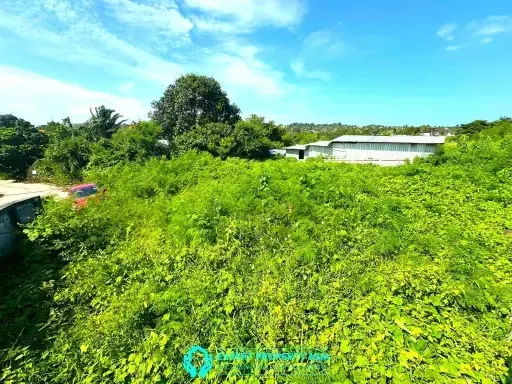
A fence, retaining wall or line of planting may not follow the registered boundary. On sloping land, changes in level and neighbouring structures can make the true line difficult to judge by eye. A qualified surveyor should compare the official plan with the site and identify the boundary markers before you rely on the advertised land area.
The survey should show the parcel’s measured area and how it sits beside neighbouring land, roads, waterways and any access route. If the shape or area differs from the listing, resolve the difference before comparing prices, agreeing contract terms or asking an architect to develop a detailed design.
How should you verify access when buying land in Koh Samui?
A road you can drive along is not necessarily a legal right of access. Equally, a registered right of way does not guarantee that the road is practical for construction vehicles or emergency access. Treat the legal route and the physical condition of the road as two separate checks.
Ask your lawyer to identify the legal route from the plot to a public road. If the route crosses another property, confirm the registered right and ask the surveyor to compare its recorded position with the route on the ground. If access relies on an informal understanding with a neighbour, do not assume that the arrangement can be made permanent or will suit your project; ask Thai counsel to assess it before you proceed.
Once the legal route is clear, consider how it works day to day. Your architect or engineer can assess road width, gradient, surface, turning space, drainage and whether delivery vehicles can reach the site. A narrow or steep approach may affect both construction logistics and the way you use the property after completion.
Are water, electricity and drainage available?
Nearby cables or a neighbouring home do not guarantee that a new connection is available for your plot. Confirm the connection point, capacity, cost and timing for electricity and water with the relevant providers. Your design team should also plan for wastewater treatment, stormwater drainage and telecommunications. If the project may rely on a well or another independent supply, obtain technical and regulatory advice before including it in the design.
Drainage deserves early attention, especially on a hillside. Ask how rainwater moves down from higher ground, where natural water paths run and how the proposed design will manage runoff without creating erosion or sending water onto neighbouring land. A site visit during or after heavy rain can reveal conditions that are easy to miss in dry weather.

How will the terrain affect your design and budget?
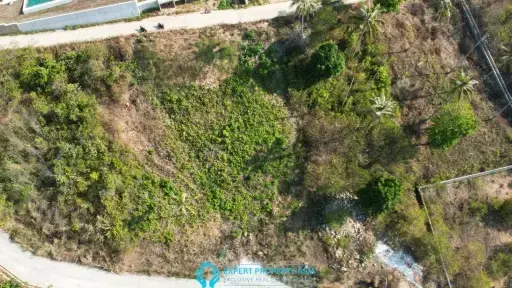
The land area on a title document does not tell you how much of the site will work for your design. A plot may rise steeply from the road, narrow between its boundaries or include ground that should remain undisturbed. The usable building area can therefore be very different from the total area shown in the listing.
A topographic survey maps the levels and contours across the whole parcel, together with boundaries, existing structures, access and important natural features. Your architect and engineer use it to understand where a building could sit and how the land may need to be managed. Online elevation layers and drone photographs can help with an early discussion, but they are not a substitute for a measured survey.
What a site survey should establish
- Levels and slope: how the land rises and falls across the full parcel, not just at one point.
- Ground conditions: whether the soil and rock are likely to need further testing before foundations are designed.
- Earthworks: how much excavation, fill, retaining work and foundation design may be needed — and whether the rules allow it.
- Water and drainage: where rainwater travels, where erosion may occur and how runoff can be managed.
- Trees and planting: which mature trees are present and whether protection requirements influence the layout.
A hillside position or open view may be part of a plot’s appeal. It can also mean more work on foundations, access, drainage or retaining structures. That does not make the land unsuitable; it means the design and likely costs should be tested against measured site conditions before you decide whether it is the right opportunity.
What can an architect establish before you buy?
An architect can help you see how your ideas might fit the site. You do not need a finished set of plans before making an offer, but an early feasibility review can reveal whether the land is a sensible match for your brief. Start by deciding whether you want a private home, a group of villas, a hospitality property or a subdivision: the intended use and scale influence which rules and approvals need to be checked.
Give the architect the title information, verified boundaries, topographic survey and a clear description of what you hope to build. Ask for an initial site layout showing a possible building position, access, height, footprint, parking, open space, landscaping, drainage and utilities. The architect should explain which constraints come from the environmental notification, which come from other planning or building rules, and which points need confirmation from the authorities.
Some larger residential, hospitality or subdivision proposals may need an initial environmental examination or a full environmental impact assessment. The relevant threshold depends on the type, scale and location of the project. Where this might apply, speak with a qualified environmental consultant early; the work involved can influence both the development budget and the timetable.
If a building already stands on the land
If a house or other building already stands on the land, ask for the building permit, approved drawings, completion documents and records of any later alterations. The 2025 notification has transitional provisions for certain previously authorised buildings and works, but this does not automatically approve a future extension, rebuild or change of use.
Ask the architect to compare the building on the ground with the approved drawings. Any differences, missing permits or undocumented changes should be understood before you assume the structure can be retained, extended or incorporated into a new design.
What should foreign buyers know before buying land in Koh Samui?
Whether the land can support a building and whether you can acquire the legal interest you want are separate questions. Foreign nationals are generally restricted from owning Thai land directly, subject to limited statutory exceptions. The available routes are specific and should not be treated as a general permission to buy any plot. The government’s overview of foreign real-estate ownership is a starting point; it was last updated in July 2023, so your lawyer should confirm the current law and how it applies to your circumstances.
A registered lease, ownership rights relating to a building, a foreign-quota condominium purchase and shares in a Thai company are different legal interests. They do not provide the same rights or protections. Before comparing them, ask an independent Thai lawyer to explain exactly what you would own or control, how the interest is registered and what happens at the end of the term or on a resale.
A Thai company should never be used as a paper arrangement to disguise foreign beneficial ownership or get around land or business restrictions. A company name on a listing does not prove that the structure is lawful or that you would receive the rights you expect. Any company-based acquisition needs independent advice on genuine shareholding, funding, beneficial ownership, governance, business purpose and the exact rights being transferred.
There are additional company-registration checks in force in 2026. DBD Order 2/2569 took effect on 1 August 2026 and requires further documents for specified company-registration applications and amendments involving foreign participation or signing authority. In the cases covered, filings include an explanation of the investment and three months of bank statements for the relevant Thai investors providing the funds and the recipient of those funds. The measure is intended to help identify nominee arrangements; it is not a blanket ban on lawful foreign investment. A company with foreign participation is not automatically unlawful — the real ownership, funding, control and business activity are what matter.
A separate DBD announcement published on 31 October 2026 reported that the Department of Business Development and the Department of Special Investigation planned to focus their initial inspections of suspected nominee activity on Koh Samui and Koh Phangan before extending to other tourist destinations. The announcement describes an enforcement priority; it does not mean that every foreign investor or foreign-linked company on either island has acted unlawfully. Anyone considering a company-based purchase should have the actual structure reviewed by independent Thai counsel.
For more background, see EPA’s guides to leasehold and freehold in Thailand and what foreign buyers should verify before making an offer. Expert Property Asia can coordinate property enquiries and introductions; legal opinions on ownership structures must come from qualified Thai counsel.
How does the location affect your checks?
The setting is part of the appeal, but the right plot depends on your priorities. When comparing land in Bophut, Plai Laem, Lamai or Taling Ngam, look beyond the district name and consider the individual site: its outlook and privacy, how easily you can reach it, the slope and usable area, nearby services, surrounding development and the rules that apply to its exact coordinates. Two plots in the same neighbourhood can offer very different design options.
EPA’s Koh Samui area guides provide additional neighbourhood context, including Bophut, Plai Laem, Lamai and Taling Ngam. Use them to build a shortlist of areas you would like to explore; use the title search, survey and planning review to assess the individual property.
What should you check before buying land in Koh Samui?
A smooth purchase starts with a clear brief and a clear division of responsibility. Decide what you want to build, then ask your lawyer, surveyor and design team to review the same plot and the same proposal. The checks below help turn a promising viewing into an informed decision.
| Area to verify | What to establish | Who should confirm it |
|---|---|---|
| Title and ownership | Original land-right document, registered owner, encumbrances and seller authority. | Independent Thai property lawyer and Land Office records. |
| Boundaries and area | Surveyed parcel limits, land area, markers and adjoining claims. | Qualified land surveyor, checked against the official plan. |
| Environmental and planning controls | Designated area, applicable notification clauses, land use, building parameters and any environmental assessment requirement. | Thai lawyer, architect and relevant authority; environmental consultant where needed. |
| Terrain and ground | Contours, elevation, slope, soil, rock, drainage, trees and likely earthworks. | Surveyor, geotechnical engineer and civil or structural engineer as appropriate. |
| Access and services | Registered right of way, road condition, construction access, water, electricity, wastewater and telecommunications. | Lawyer, surveyor, architect and utility providers. |
| Design and project viability | Whether the intended building can be fitted within the permitted envelope and serviced within a realistic project budget. | Architect, engineers, quantity surveyor or cost consultant, and relevant authorities. |
| Existing buildings and permits | Approved plans, building permits, completion records and any unauthorised alterations. | Thai lawyer, architect and the issuing authority. |
Budget for more than the purchase price
Two plots with similar asking prices can lead to very different overall project budgets. Depending on the site, allow for legal due diligence, a boundary and topographic survey, soil testing, architectural design, planning submissions, environmental assessment, access improvements, earthworks, retaining structures, drainage, utility connections, wastewater treatment and landscaping.
Ask for estimates based on the actual survey and an early design rather than a standard allowance. The aim is to compare the likely total cost of acquiring and preparing each site, not just the purchase price. EPA’s guide to property taxes for foreign buyers provides additional transaction-cost context.
Make the offer conditional on the right checks
Before signing, ask your lawyer to draft appropriate conditions for document delivery, survey access, planning review and any material title or access issue. The reservation payment, deposit amount, timing and refund terms should be written clearly into the agreed documents. Do not rely on a verbal understanding about whether money will be returned if a due-diligence issue arises.
EPA’s property acquisition process explains how an advisor can coordinate your brief, shortlist, viewings and transaction communications. The agency can help organise the process and professional introductions; legal, surveying, architectural and engineering conclusions remain with the appropriately qualified independent specialists.
Frequently asked questions
Questions buyers ask before buying land in Koh Samui
Work with Expert Property Asia
Discuss a Koh Samui land search
If you are buying land in Koh Samui, share the location, intended use and broad requirements for the site you have in mind. An EPA advisor can help identify relevant land mandates, explain the agency’s viewing and coordination process, and indicate which title, access and technical documents should be requested for independent professional review.
Property coordination from Koh Samui. Legal, planning and engineering conclusions remain with qualified independent professionals.